



Palm scanning lock launches at $129 retail
Biometric palm scanning technology has historically appeared in higher-priced security hardware. The Wyze Palm Lock brings this feature to the consumer market at a retail price point of $129.
This positions the device at a lower price than earlier palm-scanning alternatives. Buyers interested in vein-based biometric entry can now access the technology without purchasing a high-end commercial security product.

Infrared sensors read vein patterns under the skin
Standard fingerprint locks read external surface patterns, which can be affected by wet or dirty hands. The Wyze Palm Lock uses an infrared sensor to read vein patterns located beneath the skin surface.
Internal vein structures differ between individuals and are not visible externally. This scanning method does not rely on surface contact, which means moisture or surface debris on the hand is less likely to interfere.

The lock unlocks in approximately one second
The Wyze Palm Lock is rated to scan a registered hand and trigger the deadbolt mechanism in approximately one second. The device stores up to 50 distinct hand profiles in its local memory.
This capacity allows multiple household members to be registered on the same lock. Each registered user can unlock the door through the palm scanner without needing a PIN code or physical key.

Housing measures over six inches in height
The Wyze Palm Lock has a larger physical footprint than standard deadbolts. The exterior housing measures over six inches tall to accommodate the infrared scanning window and associated hardware components.
The internal components carry a Grade 3 durability rating, which is a commercial-level certification for physical resistance. Buyers should account for the device’s size when assessing compatibility with their existing door hardware.
Fun fact: Wyze previously released, and still sells, a Wyze Lock Bolt that unlocks with fingerprint verification. The company calls palm biometrics faster and more reliable.

Dual battery system extends operational uptime
The Wyze Palm Lock uses a dual-battery design to reduce the risk of losing access due to power loss. The primary removable battery pack is rated to sustain standard operation for approximately six months.
A secondary backup battery provides an additional two weeks of operation while the main pack is being charged. This design allows the lock to remain functional during the transition between power sources.
Fun fact: Wyze promises that all biometric data is encrypted and stored on the smart lock and that none of it goes to the cloud or passes through the mobile app.

USB-C port allows emergency external power
If both internal battery cells are depleted, the lock includes a USB-C port on the exterior housing. This port accepts power from a standard external battery pack connected to the device.
Once power is supplied through the port, users can enter a PIN code to unlock the door. This provides access to the home in situations where internal batteries have fully discharged.

Backlit keypad supports PIN code entry
The exterior housing includes a backlit touch keypad as an alternative to palm scanning. This allows access for individuals who do not have a registered biometric profile on the device.
The system supports up to 50 unique PIN codes, which can be assigned to household members or other authorized users. The keypad remains functional in low-light conditions due to the built-in backlight.

Anti-peep entry accepts extra digits in codes
The Wyze Palm Lock supports an anti-peep PIN entry method to reduce the risk of code observation. Users can enter additional digits before or after their actual PIN during the input sequence.
The lock’s software identifies and filters out the extra digits to process only the correct code. This method makes it harder for bystanders to determine the actual PIN from observing the keypress sequence.

The radar chip activates the scanner only on approach
The lock includes a millimeter-wave radar sensor that monitors presence within approximately three feet of the device. The biometric scanner remains in a low-power state until the radar detects someone at the door.
This selective activation reduces unnecessary power consumption from the internal batteries. Pedestrians or vehicles passing at a distance do not trigger the scanner, which helps extend the battery cycle between charges.
Gyroscope detects door position for auto-locking
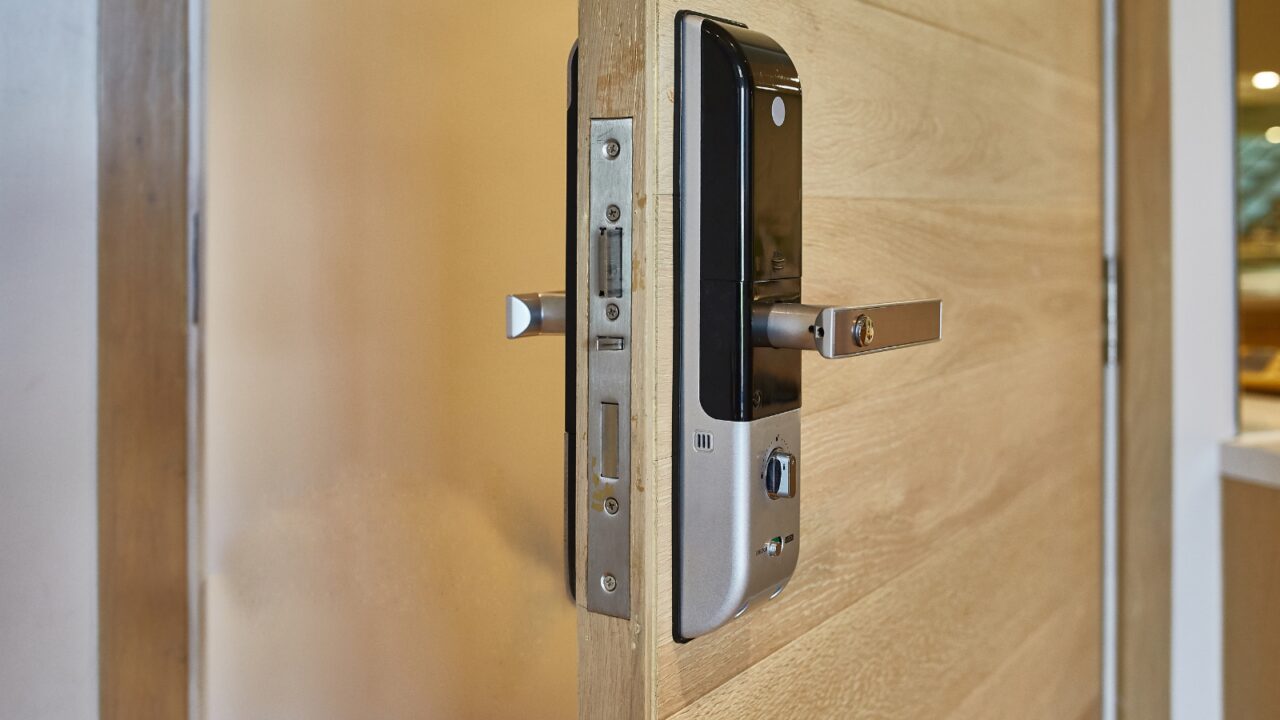
The Wyze Palm Lock includes a built-in gyroscope that tracks the physical angle of the door. When the door reaches a position that aligns with the frame, the software registers the change.
At that point, the deadbolt engages automatically without requiring manual input. This auto-lock function is based on door angle detection and activates when the device determines the door is in a closed position.

Biometric data is stored locally on the device
The Wyze Palm Lock stores vein templates and PIN codes on the physical device rather than transmitting them to external servers. The data is encrypted and remains local to the hardware.
This design means biometric profiles are not routed through cloud infrastructure during standard operation. Users who prefer to keep sensitive access data off external networks may find this approach relevant to their preferences.

Wi-Fi radio supports remote lock monitoring
The lock includes a built-in Wi-Fi radio that connects the device to the home network. This connection allows users to check the lock’s current status from a remote location through the companion app.
The app maintains a log of locking and unlocking events with timestamps. This history can be reviewed to check when specific access events occurred, including entries made by registered household members.
Thinking about setting up a smart lock of your own? We’ve got a straightforward installation guide to walk you through every step.

The app connects the lock with compatible video doorbells
The Wyze app allows the Palm Lock to be paired with compatible Wyze video doorbells. Users can view a live doorbell feed and send an unlock command from within the same app interface.
Smart assistant integration is currently supported on Amazon Alexa and Google Home platforms. Buyers who use other smart home ecosystems should verify compatibility before purchasing the device for integration purposes.
Still on the fence about ditching your traditional lock for good? We’ve got an honest breakdown that might just make up your mind.
Would being able to check your lock status from anywhere give you real peace of mind, or do you think it’s a feature you’d rarely use? Share your thoughts in the comments.
This slideshow was made with AI assistance and human editing.
Don’t forget to follow us for more exclusive content right here on MSN.
Read More From This Brand:





