


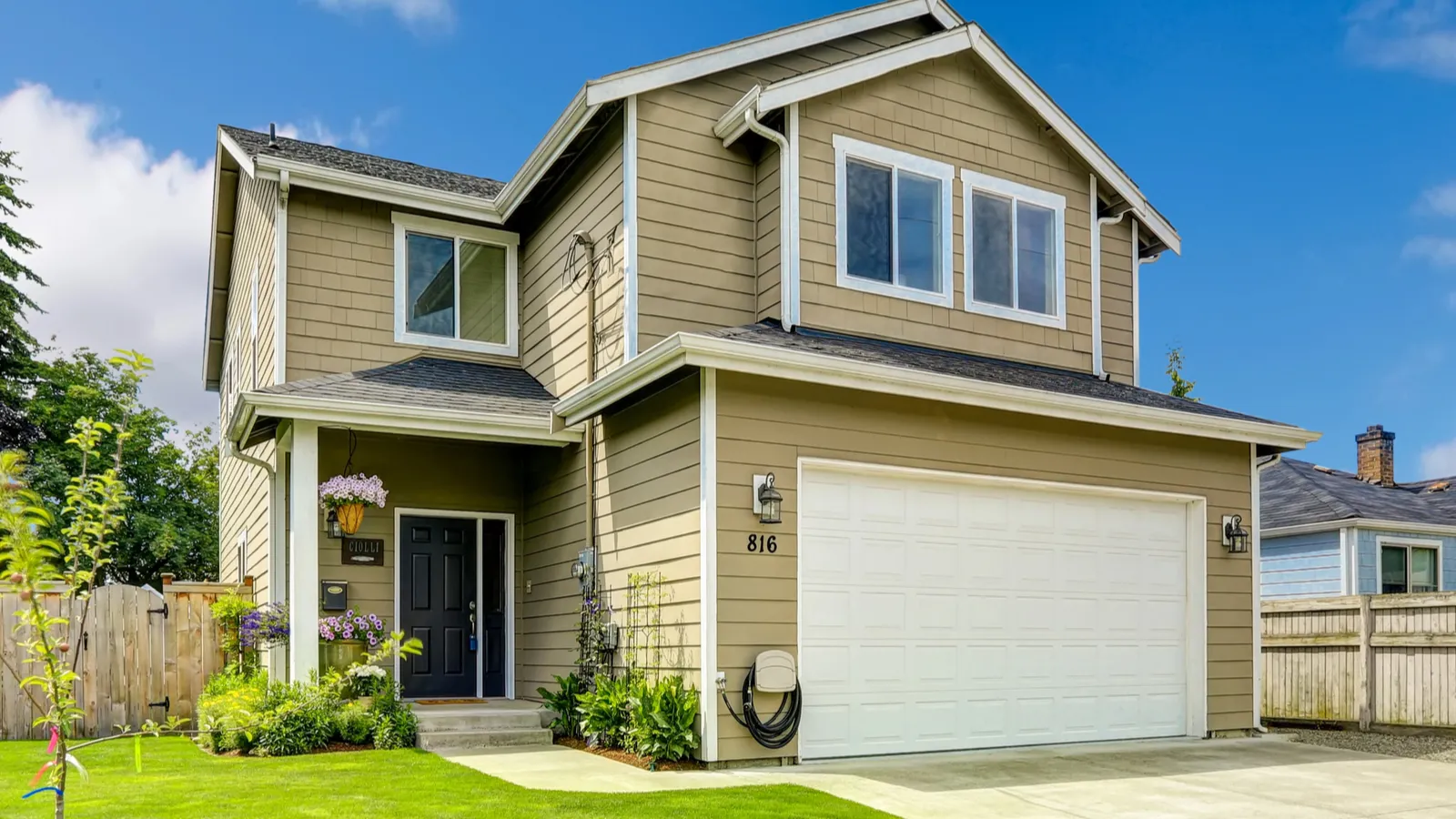

America is shrinking the dream
For years, the dream home was sold as bigger, taller, and farther from town. Now the number drawing attention is about 2,070 square feet, a size that points to a more realistic version of comfort.
That shift matters because buyers are facing high prices, tight supply, and expensive borrowing. The new goal is not a mansion. It is a home with enough room to live well without paying for space that sits empty.

The mansion ideal is fading
The change is not about Americans suddenly wanting tiny homes. A 2,070-square-foot house can still fit three or four bedrooms, a family room, storage, and a small outdoor area.
What is changing is the value placed on unused space. Buyers are questioning formal dining rooms, oversized foyers, and extra rooms that raise costs without improving daily life.

Builders are redrawing plans
Builders are responding by changing the size and shape of new homes. The average size of a new home fell from 2,479 square feet in 2022 to 2,411 square feet in 2023, the smallest average in 13 years.
That shift shows up in floor plans, not just sales language. NAHB said 38% of builders built smaller homes in 2023, and 26% planned to go even smaller in 2024.

New homes are near the target
The market is already close to the 2,070-square-foot dream. Census data shows the median size of a new single-family home sold in 2024 was 2,210 square feet.
Completed single-family homes were even closer, with a median size of 2,146 square feet in 2024. That means many new homes are already landing near what buyers say they actually want.
Little-known fact: Among single-family homes completed in 2024, 42% had four or more bedrooms and 31% had three bathrooms or more.

Monthly payments drive decisions
For many buyers, square footage now gets judged through the monthly payment. A larger house usually means a bigger mortgage, higher taxes, higher insurance, and more money spent on heating, cooling, and repairs.
That is why a smaller new home can feel more practical even when the price is still high. Buyers are not just asking how much house they can buy. They are asking how much house they can comfortably keep.
Little-known fact: The median price of a new single-family home sold in 2024 was $420,300, while the average sales price was $514,500.

Layout now matters more
The smaller dream home depends on smarter design. Buyers still want homes that work for jobs, school, pets, packages, and aging parents, but they want fewer wasted corners.
That is why builders are adding practical features instead of just more square footage. Recent NAHB data showed interest in drop zones, flex rooms, and EV charging areas inside new homes.

Outdoor space fills the gap
A smaller interior does not always mean less living space. Builders are using porches, patios, decks, lighting, and landscaping to make homes feel larger without expanding the main structure.
This is especially useful in the South and West, where outdoor living can last much of the year. A patio can replace the need for a large bonus room in many households.

Townhomes are gaining ground
The same trend is showing up in attached housing. Townhomes made up a record 17% of the single-family market in 2024, up from 10% in 2009.
That shift reflects land and construction costs as much as lifestyle. A townhome can give buyers ownership, bedrooms, and a small outdoor area at a lower price than a detached house.

Generations want different sizes
The 2,070-square-foot dream is not one-size-fits-all. Millennials still prefer larger homes, with a median target of 2,408 square feet, while boomers are closer to 1,869 square feet.
Gen X and Gen Z are near the middle, around 2,250 square feet. The common thread is that each group is becoming more open to better finishes over extra space.

The shortage limits choices
The size shift is happening inside a tight housing market. Realtor.com estimated the U.S. housing supply gap widened to 4.03 million homes in 2025.
That shortage affects what buyers can realistically find. When there are not enough homes for sale, a well-designed 2,070-square-foot house can beat waiting months for a larger home that may never fit the budget.

Location changes the math
Square footage costs very different amounts depending on the region. Census data for 2023 showed the median price per square foot for new homes was lowest in the South and highest in the Northeast.
That means a 2,070-square-foot home can feel attainable in one market and expensive in another. Buyers in higher-cost states often have to trade size for location, commute, or school district.

Smaller lots are part of it
The home itself is not the only thing shrinking. NAHB said median lot sizes have dropped by about 1,000 square feet over the last 15 years, reaching about 8,400 square feet.
That changes the shape of the American dream. A smaller yard can lower land costs, but it also puts more pressure on floor plans, storage, privacy, and neighborhood design.
Are designers changing how open spaces work in 2026? Try micro-zoning to make large rooms feel more organized, flexible, and easy to live in.

Zoning is opening new options
Cities and states are starting to allow more modest housing types. Some places are making it easier to build accessory dwelling units, duplexes, townhomes, and smaller-lot homes.
These policy changes matter because they create more choices between renting an apartment and buying a large detached house. For many households, the future dream home may be smaller because the rules finally allow it.
Want your home to feel bigger without adding more stuff? Try this simple minimalist rule before your next room refresh.
The next dream home may be the one that uses every room well. Would you trade extra square footage for a smarter floor plan? Share your take in the comments.
This slideshow was made with AI assistance and human editing.
Don’t forget to follow us for more exclusive content right here on MSN.
Read More From This Brand:





