


Artificial intelligence factories need fiber
Artificial intelligence factories may sound like science fiction, but they are large data centers built to train and run modern artificial intelligence systems. Their strength depends on how fast machines can securely share data.
Powerful chips get attention, yet fiber keeps those chips working together. Thin glass strands carry huge amounts of information with low delay, helping AI systems stay connected, busy, and ready for bigger workloads at scale.

The chip hype misses the wires
New AI systems can involve costly servers, accelerators, switches, optics, and power infrastructure, but that investment loses value when data moves too slowly. A weak network can leave GPUs waiting instead of computing during training or inference.
That is why builders look beyond servers when planning AI capacity. Cable routes, patch panels, optical links, and switch fabrics matter because the network helps a large cluster behave like one coordinated machine.

Old traffic patterns no longer fit
Traditional cloud workloads often centered on requests moving between users and servers. Data entered the facility, reached compute or storage resources, and then moved back to the person, app, or service that requested it.
Engineers often call that north-south traffic. It still matters, but AI training adds heavy internal traffic between GPUs and servers, so older network layouts can create bottlenecks at oversubscribed switches and aggregation points.
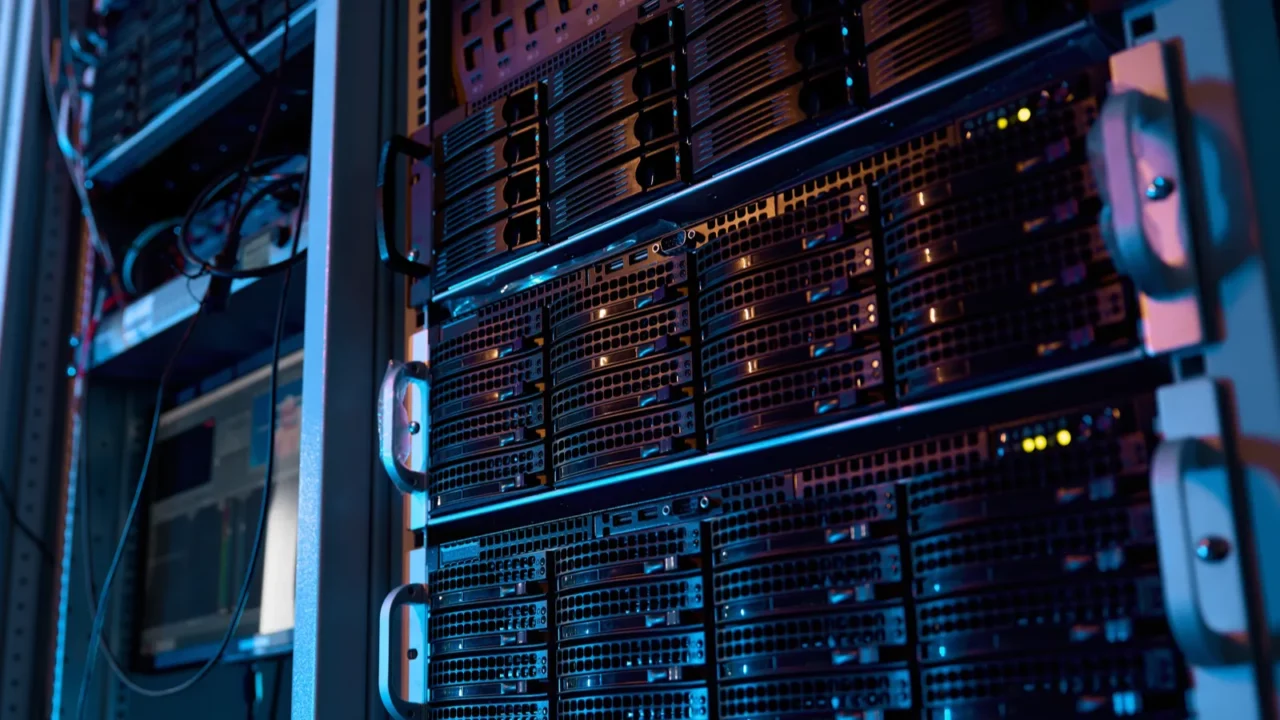
East-west traffic drives demand
AI clusters create heavy east-west traffic, meaning data moves between machines inside the same site. GPUs exchange model updates, training data, gradients, and results many times while a training or inference job is running.
When thousands of chips must stay synchronized, the network cannot act like a narrow hallway. More well-planned fiber paths help messages move across the cluster without piling up at shared choke points.
Little-known fact: A single large data center can use millions of gallons of water each year just for cooling. Keeping servers from overheating is one of the biggest challenges behind the scenes.

GPUs work best in groups
A single GPU can process many calculations at once, but the largest AI models often need many GPUs working together. Each chip handles part of the workload, then exchanges intermediate results or updates with others.
That teamwork helps only when communication is fast and reliable. Fiber-backed networks give GPU clusters the bandwidth they need, reducing delays that can slow training runs or leave expensive hardware underused.

Fiber density solves space pressure
AI data centers need more connections, yet buildings have limited room for trays, ducts, and racks. As link counts rise, the physical space for cabling becomes a real engineering problem for operators.
High-density fiber designs pack more optical pathways into a limited space. Smaller cables, multicore fiber, and compact connectors can support expansion without filling overhead trays too quickly or making airflow and maintenance harder.
Fun fact: Data centers never shut down, even for a second. Backup systems kick in instantly to avoid outages that could affect millions of users.

Tiny glass carries giant loads
Fiber optic cable sends data as light, not electrical pulses through metal. That helps it move information across data centers with high bandwidth and lower signal loss over many common operating distances.
Copper still has uses, especially for short links inside racks or nearby equipment, but fiber is central to high-speed AI networks. Current optical roadmaps and products support 400G and 800G links, with 1.6T optics moving into AI network planning.

Errors can disrupt real work
AI training is not like streaming a movie, where a brief glitch may go unnoticed. Many training jobs depend on thousands of chips staying coordinated through repeated rounds of calculation and communication.
Packet loss, link errors, or unstable connections can slow a run, trigger retries, or disrupt collective operations. Strong fiber design and reliable network architecture help reduce those risks when teams are paying for large amounts of computing power.

Prebuilt links speed projects
AI capacity is useful only after it is connected, tested, and ready for customers. On-site splicing and manual termination can slow large projects when thousands of fiber connections are involved.
Pre-terminated fiber arrives from the factory with connectors already attached and tested. Crews can install it faster, reduce field changes, and bring new data halls online with cleaner cable management.

Future speeds need smart planning
Network speeds keep rising as AI models and services demand more data movement. A site designed only for current links may need costly rework when faster switches, optics, and cable-density requirements arrive.
Planning fiber early helps data centers move from 400G to 800G, then toward 1.6T where needed. The goal is room to upgrade without tearing apart pathways that are already crowded.

Cooling depends on the cable order
AI racks can use large amounts of electricity, which means they also produce serious heat. Cooling systems need clear airflow, and messy cable bundles can make that harder than expected.
Good fiber layouts support both data movement and cooling. Organized routes, smaller cables, and thoughtful patching help technicians reach equipment while keeping air moving around servers, switches, and power gear.

Design starts with the network
Older projects often picked servers first, then figured out how to connect them. AI pushes planners to think about networking earlier because performance depends on every chip reaching its partners efficiently.
That shift makes fiber part of the first design conversation, not a late add-on. The layout affects speed, reliability, maintenance, upgrades, cooling, and how much computing can fit inside the facility.
AI infrastructure starts with design choices that can reshape entire communities. See how one AI data center project began weeks after a town rejected a $16 billion plan.

Fiber shapes AI growth
The next leap in artificial intelligence will not come from chips alone. Large systems need strong physical pathways because model updates, search results, and generated answers all depend on moving data quickly and reliably.
Dense fiber gives AI factories a practical foundation for scale. It helps data centers connect more processors, support faster networks, and keep growing without turning the cable plant into a bottleneck.
AI infrastructure is getting bigger fast, and the fallout can reach far beyond the server room. Take a look at how a $6 billion AI data center deal helped oust Missouri officials.
Which matters more for AI growth: faster chips or stronger fiber networks? Share your take in the comments, and give this post a like if it made you think.
This slideshow was made with AI assistance and human editing.
Don’t forget to follow us for more exclusive content right here on MSN.
Read More From This Brand:





