


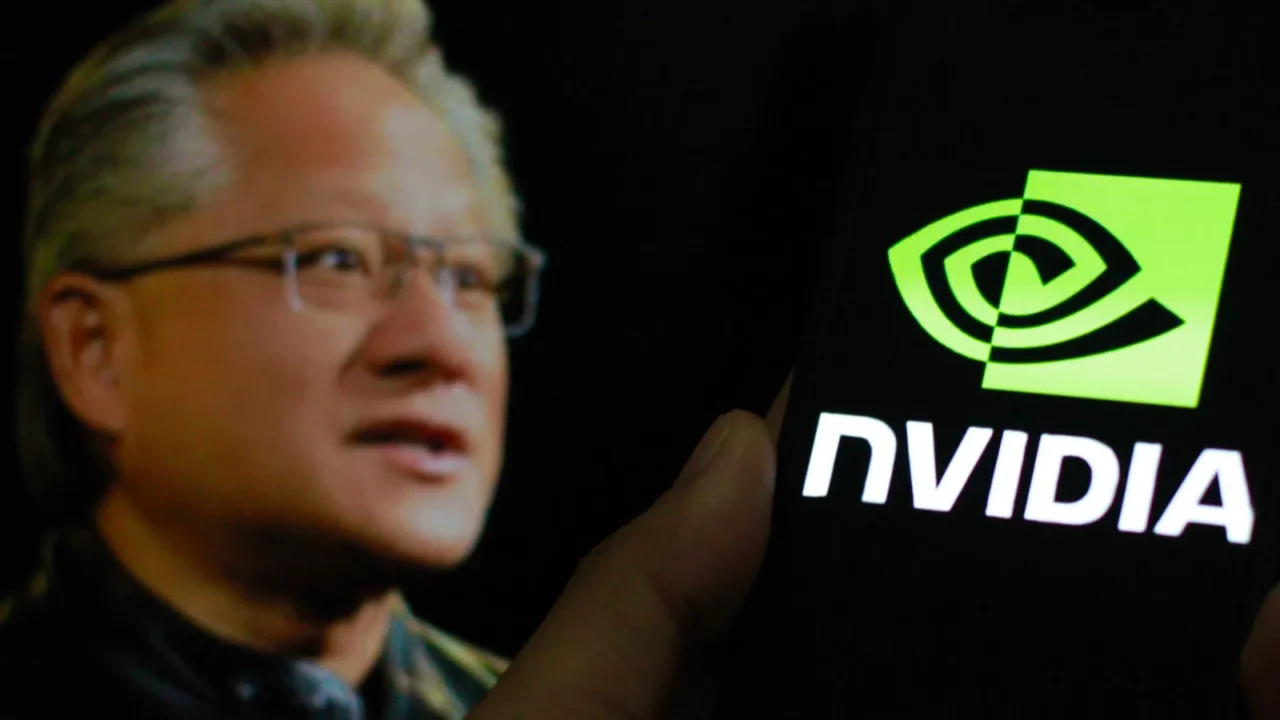
The statement that shocked Silicon Valley
As several wealthy tech figures reportedly moved assets, residency ties, or property out of California amid tax concerns, Nvidia CEO Jensen Huang took the opposite position during a Stanford event: “Move to California. Don’t leave.”
The remark stood out because it came as California’s proposed billionaire tax was becoming one of the state’s most closely watched business and political fights.

An $8 billion bill ignored
Based on Huang’s multibillion-dollar net worth, California’s proposed one-time 5% billionaire tax could theoretically create a tax bill approaching $8 billion, depending on valuation and how the measure is applied. His reaction? Completely unbothered. Huang has publicly indicated that he is not especially concerned about the proposal and has said he is “perfectly fine” with a billionaire tax under consideration in California.
That ice-cold composure is rare even among the ultra-wealthy. It reflects the mindset of someone who co-founded Nvidia and helped turn it into one of the world’s most valuable technology companies, while refusing to let tax policy define the company’s next move.
The tax dividing California
The proposed “2026 Billionaire Tax Act” would impose a one-time 5% levy on every California resident with a net worth exceeding $1 billion. Supporters estimate the measure would impact roughly 200 of the state’s wealthiest individuals, generating approximately $100 billion in new revenue.
It is an ambitious, aggressive policy, and it has sliced Silicon Valley’s billionaire class into two very distinct camps: those fleeing and those firmly holding their ground.

Tech titans already fled
The proposed wealth tax has already triggered a high-profile exodus. Meta CEO Mark Zuckerberg and Google co-founders Larry Page and Sergey Brin have all relocated to lower-tax states like Nevada and Florida.
These aren’t minor figures; they represent some of the most powerful and innovative minds in American technology. When some of the most influential figures in modern technology begin looking beyond California, the question becomes unavoidable: who leaves next?

Huang doubles down hard
Jensen Huang isn’t just staying in California; he’s actively championing it. At Stanford, he told the audience that beyond the business advantages, even the state’s famously beautiful weather is reason enough to stick around.
While other billionaires quietly calculate their escape routes and consult tax attorneys, Huang is going the opposite direction entirely. His commitment isn’t blind loyalty, it’s a calculated, confident bet on California’s long-term dominance in global technology.

Talent over tax savings
When pressed on why Nvidia remains rooted in California despite sky-high costs, Huang’s answer was direct and unapologetic. Silicon Valley is where the world’s most elite engineering and technology talent is concentrated.
Nvidia operates globally, but Huang’s argument is that California’s concentration of engineers, researchers, founders, and investors remains difficult for other regions to match. For Huang, no tax savings in Florida or Nevada can compensate for the loss of access to that irreplaceable human capital.

“Perfectly fine” paying billions
Months before his bold Stanford remarks, Huang had already signaled his stance during a Bloomberg Television interview. He stated that he was “perfectly fine” with the proposed billionaire tax and emphasized that Nvidia continues to see Silicon Valley as central to its business because of the region’s talent base.
Whatever financial obligations come attached to that decision, Huang accepts them fully. There are no threats to relocate, no lobbying campaigns against the bill, just calm, total acceptance of the cost of commitment.

Stanford hosted a landmark talk
On April 9, 2026, the newly established Stanford Leadership Institute hosted a conversation that drew national attention. Jensen Huang appeared alongside progressive Congressman Ro Khanna and former National Security Advisor General H.R. McMaster at Stanford’s Graduate School of Business.
The wide-ranging discussion covered artificial intelligence, national security, workforce development, and America’s competitive position against China. It was more than a standard academic panel; it was a high-profile discussion about U.S. technology leadership, AI adoption, workforce readiness, and national security.

Tax ballot race is on
Despite generating enormous public debate, California’s billionaire wealth tax has not yet been officially placed on the ballot because election officials still need to verify the submitted signatures. Supporters say they collected more than 1.5 million signatures, well above the roughly 875,000 needed, putting the measure on track for the November 3, 2026, election if verification succeeds.
Whether this bold tax proposal becomes law or quietly fades away under pressure from Silicon Valley’s powerful opposition will define California’s economic identity for years ahead.

AI won’t take your job
Jensen Huang delivered one of his most memorable and widely discussed lines at the Stanford event, completely reframing the national anxiety around artificial intelligence and employment.
He argued that workers are more likely to lose opportunities to a colleague who knows how to use AI effectively than to AI itself. The real competitive threat is not the technology it is the human being sitting nearby who has already mastered it and is working twice as fast.

Global talent fuels U.S. dominance
At the Stanford Leadership Institute event, Congressman Ro Khanna reinforced the core argument running throughout the entire conversation. America’s single greatest competitive advantage in artificial intelligence is its remarkable ability to attract top-tier talent from every nation on earth.
Researchers, engineers, and entrepreneurs choose the United States because of its universities, its culture of innovation, and the opportunities available here. Policies that discourage that flow of talent do not just hurt California; they can also weaken America’s broader technological standing.
As Nvidia expands its role in AI PCs and global infrastructure, it is also forming partnerships that could shape the next phase of AI computing. See how Nvidia’s AI chip partnership with Saudi Arabia could affect global data center growth and advanced AI infrastructure.

California’s defining moment arrives
Jensen Huang’s defiant public stand has brought California’s biggest economic tension into sharp national focus. The state’s most influential tech leaders are genuinely divided on whether its aggressive tax climate threatens Silicon Valley’s long-term dominance in global innovation.
The debate touches capital formation, talent retention, startup culture, and America’s ability to outpace China in artificial intelligence. California now faces a defining choice: does it lead the world by investing boldly in its future, or slowly price that future away?
As Nvidia promises smarter, more helpful laptops, they’re simultaneously pushing for policy changes that could accelerate everything. Check out how Nvidia pushes Trump to loosen AI chip export rules and see what trade barriers stand between current devices and the AI-powered future.
If you found this interesting, give us a like and share your thoughts in the comments.
This slideshow was made with AI assistance and human editing.
Don’t forget to follow us for more exclusive content right here on MSN.
Read More From This Brand:





Lucky you! This thread is empty,
which means you've got dibs on the first comment.
Go for it!