


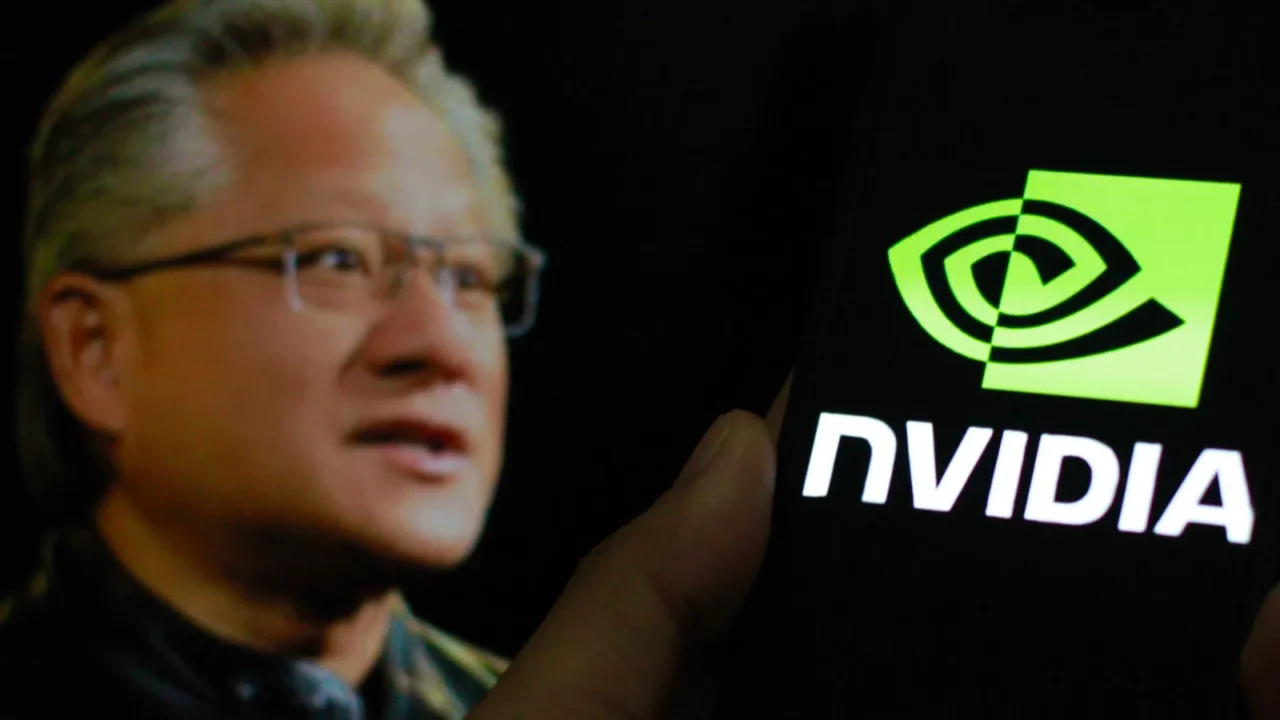
Nvidia targets CPU growth
Nvidia is no longer focused only on dominating the AI GPU market. The company is expanding into CPUs, with Nvidia leadership framing Vera as access to a new CPU opportunity worth about $200 billion. That move places Nvidia in direct competition with longtime industry leaders like Intel and AMD.
Investors increasingly view Nvidia as more than an AI chipmaker. The company is rapidly transforming into a full-scale computing platform provider with a growing role across AI infrastructure, data center systems, networking, and next-generation edge computing.

AI infrastructure enters new era
For years, CPUs handled traditional computing tasks while GPUs focused on graphics and AI acceleration. That separation is quickly disappearing as artificial intelligence workloads demand tighter integration between both technologies.
Nvidia’s Vera Rubin strategy combines Vera CPUs, Rubin GPUs, NVLink networking, and AI factory infrastructure into a tightly integrated platform for training, inference, and agentic AI workloads. This shift matters because companies building future AI systems now want unified platforms that improve speed, efficiency, and scalability, rather than relying on disconnected hardware solutions from multiple vendors.

Intel faces growing pressure
Intel has long been a dominant force in x86 processors, especially across PCs, enterprise servers, and data center CPUs. Nvidia’s expansion into CPUs now threatens that long-standing dominance. Industry analysts believe Nvidia could capture meaningful server market share within the next few years as AI infrastructure spending accelerates.
Intel still has a sizable data center business, but it faces pressure from Nvidia’s faster AI infrastructure growth, competition in server CPUs, and ongoing scrutiny around its advanced manufacturing roadmap. Nvidia’s aggressive push may intensify concerns about Intel’s long-term ability to remain an industry leader.

AMD battles stronger competition
AMD spent years building momentum as the strongest alternative to Intel in both consumer and enterprise computing markets. Nvidia’s growing ambitions now create an entirely new challenge for the company.
AMD must defend its successful CPU business while simultaneously competing against Nvidia in the booming AI accelerator market. AMD remains a serious competitor, with strong growth in EPYC server processors and Instinct AI accelerators, but Nvidia’s software ecosystem, cloud partnerships, and AI infrastructure scale could make the competitive battle harder in the coming years.

Software gives Nvidia advantage
Nvidia’s biggest competitive edge may not be its hardware alone. The company’s CUDA software platform has become deeply connected to artificial intelligence development across industries worldwide. Many developers and businesses already rely heavily on Nvidia’s ecosystem to build AI applications and large-scale computing systems.
That creates a powerful barrier for competitors because switching platforms often requires costly redevelopment. By expanding into CPUs, Nvidia strengthens its ability to keep more workloads within its broader hardware and software ecosystem.

Investors reshape chip valuations
Nvidia’s expansion into a potential $200 billion market is forcing Wall Street to reevaluate the future of the semiconductor industry. Investors are increasingly rewarding companies tied closely to artificial intelligence infrastructure while showing less confidence in businesses viewed as falling behind.
AI-focused firms continue to attract strong market enthusiasm as demand for advanced computing power accelerates. Meanwhile, companies seen as less central to AI infrastructure may face tougher investor scrutiny, even if they remain important players in the broader semiconductor sector.

Broadcom quietly gains momentum
While Nvidia dominates headlines, Broadcom has become one of the clearest beneficiaries of the AI infrastructure boom through custom accelerators and AI networking. Major technology companies are investing heavily in custom AI chips to reduce their dependence on Nvidia hardware and control infrastructure costs more effectively.
Broadcom plays a critical role by helping hyperscalers design and develop those custom semiconductor solutions. As demand for personalized AI hardware grows, Broadcom could strengthen its position as an essential supplier behind the scenes of the AI revolution.

Tech giants seek alternatives
Large technology companies including Amazon, Google, Microsoft, and Meta are investing billions into developing their own artificial intelligence chips. Nvidia’s processors remain powerful, but they are also expensive and difficult to secure due to overwhelming demand.
Tech giants increasingly want greater control over costs, supply chains, and long-term infrastructure planning. Nvidia’s expansion into CPUs may accelerate those concerns even further because hyperscalers do not want one company controlling both AI acceleration and core computing systems simultaneously.

AI spending keeps surging
The artificial intelligence race is driving one of the largest infrastructure spending waves the technology industry has ever seen. Big Tech firms including Alphabet, Microsoft, Amazon, and Meta are expected to spend at least $630 billion this year on AI infrastructure, including chips, servers, storage, networking, and data center capacity.
That spending creates massive opportunities for chipmakers across the industry. However, investors are also beginning to question whether long-term AI revenue growth will eventually justify the enormous financial commitments currently reshaping the global technology landscape.

China remains critical market
Despite rising geopolitical tensions and stricter export restrictions, Nvidia continues to view China as a major long-term growth opportunity. China remains one of the world’s largest technology and semiconductor markets, especially in the development of artificial intelligence.
Nvidia’s leadership still sees strong potential for future CPU and AI infrastructure demand inside the region. However, rising government regulations, trade restrictions, and rapidly improving domestic Chinese chipmakers could pose serious challenges to Nvidia’s expansion strategy in one of the industry’s most important markets.

TSMC powers global chipmaking
Taiwan Semiconductor Manufacturing Company, widely known as TSMC, has become one of the most important companies in the entire technology industry. Nvidia and AMD rely on TSMC for advanced AI chips, while major cloud companies also depend on TSMC to manufacture custom AI processors.
As AI demand continues rising, TSMC’s production capacity is becoming increasingly critical to the semiconductor supply chain. The company’s ability to manufacture cutting-edge processors now plays a direct role in determining how quickly the global AI industry can continue expanding.

Nvidia drives market sentiment
Nvidia has become one of the most influential companies in the entire stock market because of its central role in artificial intelligence growth. Nvidia’s earnings reports can influence not only semiconductor stocks but also broader technology-sector sentiment because investors treat the company as a key signal for AI infrastructure demand.
Investors closely monitor Nvidia’s revenue growth, supply chain strength, pricing power, and future demand forecasts. Strong results continue fueling confidence in the AI boom. However, even small signs of slowing momentum could quickly create volatility throughout the semiconductor industry.
Want to know what skills could matter most in the AI era? See what Jensen Huang says young talent should focus on before diving into the future of artificial intelligence.

AI chip cycle accelerates
Nvidia’s expansion into a $200 billion opportunity represents more than just another corporate growth strategy. It signals a powerful shift in the semiconductor industry, with artificial intelligence becoming one of the strongest forces shaping chip design, infrastructure spending, and investor attention.
Every major chipmaker must now adapt to a world where AI influences infrastructure decisions, technology investments, and future innovation priorities. Companies capable of moving quickly and scaling efficiently may dominate the next decade of computing, while slower competitors risk losing relevance in the rapidly evolving semiconductor industry.
It turns out, the conversation around AI risk is reaching places you might not expect. See how NVIDIA’s CEO recently received a royal message about the dangers and responsibilities of AI. The stakes are clearly higher than ever.
If you found this interesting, give us a like and share your thoughts in the comments.
This slideshow was made with AI assistance and human editing.
Don’t forget to follow us for more exclusive content right here on MSN.
Read More From This Brand:





