


Nvidia raises bigger stakes
NVIDIA’s planned $150 billion in annual Taiwan spending makes this rivalry much bigger than a typical chip fight. It shows how much the company is willing to invest in AI infrastructure, from advanced chipmaking to server assembly.
That scale puts AMD under pressure because the battle is no longer only about faster processors. It is about supply, delivery, software support, and customer confidence at a massive global scale.

AMD sees fresh room
AMD is not standing still while Nvidia dominates the AI boom. Its Instinct accelerators, EPYC server processors, and open technology approach give cloud companies another serious option. That matters because major buyers do not want to depend on one supplier forever.
AMD does not need to beat Nvidia everywhere. It only needs enough large AI wins to weaken Nvidia’s grip and prove customers have a real choice.

Blackwell keeps demand rising
NVIDIA’s Blackwell platform keeps the company at the center of the AI hardware race. Big cloud providers want chips that can train larger models, run faster inference, and manage huge data center workloads. Blackwell gives Nvidia a powerful new reason to keep customers close.
AMD’s challenge is proving its newest AI chips can compete beyond lab tests and deliver strong performance inside real business systems.

Taiwan carries huge weight
The $150 billion spending plan matters because Taiwan is a key part of the global AI supply chain. NVIDIA depends on the region for advanced manufacturing, packaging, server parts, and system support.
That makes the investment powerful, but it also highlights how much it depends on one important hub. For AMD, any customer worried about supply risk may become more interested in having another reliable chip partner.
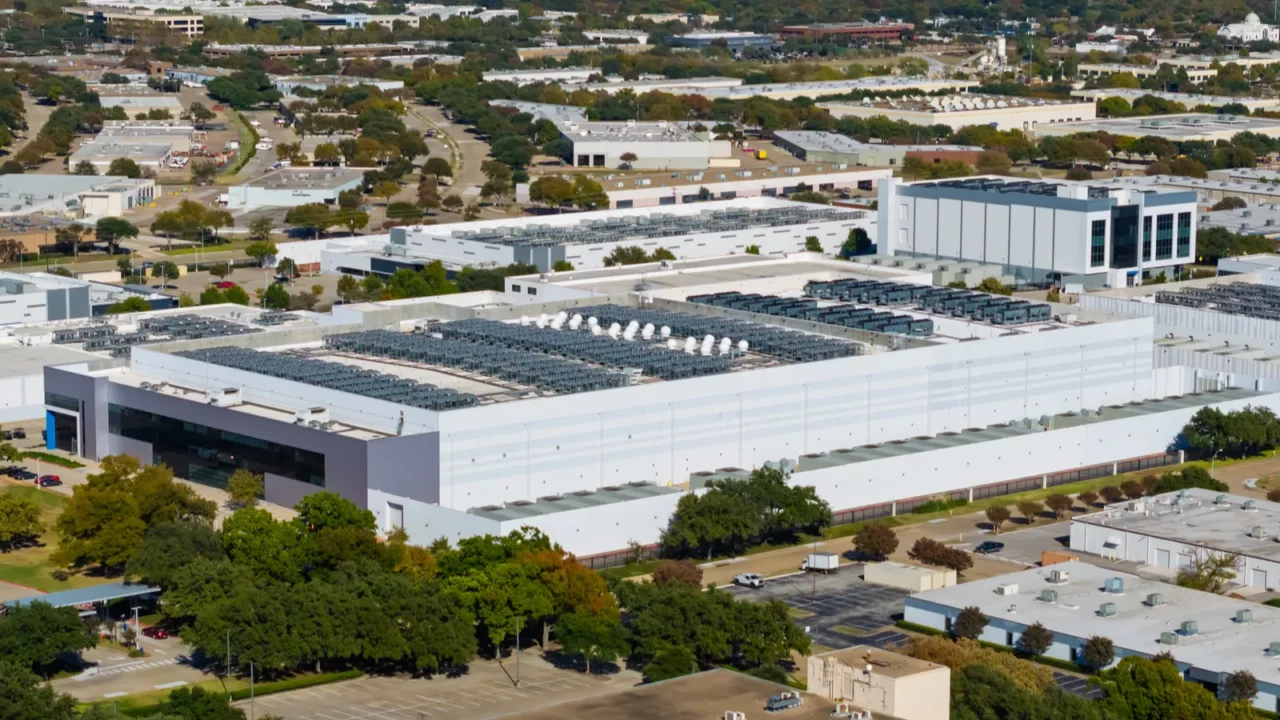
Data centers drive everything
NVIDIA became famous through gaming graphics, but data centers now bring in the biggest money. AI servers, networking products, and accelerator systems have become central to its growth. That shift changes the AMD rivalry because business customers care about more than brand power.
They want a stable supply, strong software, lower energy use, and better long-term costs. The company that wins data center budgets controls the real AI race.

CUDA protects Nvidia deeply
NVIDIA’s strongest advantage is not only its chips. Its CUDA software ecosystem keeps developers, researchers, and companies tied to Nvidia hardware. Moving to AMD can reduce costs or limit dependence on a single vendor, but it may also require additional engineering work.
That creates friction for customers considering a switch. AMD’s software progress matters because even a strong chip can struggle if the developer path feels difficult.
Fun fact: Nvidia’s planned $150 billion yearly Taiwan spend is so huge that it is bigger than the annual revenue of many Fortune 500 companies, showing how costly the AI chip race has become.

AMD pushes open choice
AMD’s biggest message is flexibility. It promotes open standards, broad compatibility, and a wider platform that includes CPUs, GPUs, networking, and adaptive computing products.
That pitch speaks to companies that do not want one supplier controlling every part of their AI stack. AMD does not need every customer to abandon Nvidia. It needs enough major buyers to show that a strong alternative can work at scale.
Little-known fact: Nvidia already spends about $100 billion a year in Taiwan, and Jensen Huang’s $150 billion target would make Taiwan even more central to the global AI boom.

Pricing pressure may build
NVIDIA’s lead gives it strong pricing power, especially when AI chip demand exceeds available supply. AMD’s opportunity is to make customers more carefully compare costs, memory, power use, and long-term lock-in. Even smaller AMD wins can change contract talks.
If buyers believe AMD can deliver at scale, Nvidia may need to protect deals with better pricing, faster shipments, or stronger system packages.

Memory shapes the battle
AI chips need powerful memory to move huge amounts of data quickly. High bandwidth memory is especially important for training and running advanced AI models, but supply can be expensive and limited.
NVIDIA’s size gives it strong buying power, while AMD can compete with designs that require large amounts of memory. For customers, the real winner may be the company that delivers complete systems on time.

Inference changes AI spending
The next big AI spending phase is shifting from training giant models to running them for everyday users. This is called inference, and it rewards efficiency, lower costs, and steady performance.
NVIDIA wants to dominate this market too, but AMD has room to compete if it can offer strong results at better economics. The company that wins inference could shape future profit margins across AI services.

China adds real uncertainty
Export limits and China’s demand keep adding to the uncertainty in the Nvidia-AMD rivalry. Rules on advanced AI chips can affect what companies sell, where they sell it, and how much revenue they can capture.
Both companies must adjust their product plans to reflect shifting restrictions. For U.S. investors and tech buyers, the chip race is no longer just about innovation. Policy risk now sits near the center.

Investors demand flawless growth
NVIDIA’s huge market value means investors expect almost perfect execution. Even strong earnings can face pressure if growth slows, margins tighten, or data center demand looks less explosive. AMD faces a different challenge.
It must prove that its AI business can grow, become steadier, and become more profitable. That contrast makes the rivalry interesting because Nvidia must defend its dominance, while AMD must turn potential into repeatable revenue.
Curiosity is exactly the right starting point, and some of the best advice comes straight from the top. Find out what NVIDIA’s CEO wants young talent to know about working with AI.

Rivalry spreads across AI
NVIDIA remains far ahead, but AMD is making it harder to dismiss the race. The fight now covers chips, servers, software, memory, cloud deals, PCs, and supply chains. NVIDIA’s $150 billion Taiwan bet shows how much infrastructure the AI boom requires.
AMD’s challenge is difficult but clear. It must move from being the backup option to becoming the trusted second force in AI hardware.
It turns out, the conversation around AI risk is reaching places you might not expect. See how NVIDIA’s CEO recently received a royal message about the dangers and responsibilities of AI.
Nvidia’s huge spending plan could change the next phase of the AI chip battle. Do you think AMD can keep closing the gap? Drop your thoughts in the comments and leave a like.
This slideshow was made with AI assistance and human editing.
Don’t forget to follow us for more exclusive content right here on MSN.
Read More From This Brand:





