


Home robots are moving closer to real chores
Remember when a robot vacuum felt like the future? Now a new wave of home and service robots is moving from lab demos toward early real-world trials, with companies testing machines that can make beds, prepare simple food tasks, fold laundry, or clear dishes in homes and commercial settings.
Several companies are moving beyond concept-stage demos into pilots, preorders, or limited deployments, though many systems still rely on human guidance, beta testing, or controlled rollouts.

Panther is doing chores in real homes now
UniX AI says its Panther robot completed what it calls the first real-home deployment of a mass-producible humanoid robot. It worked inside actual, unmodified homes with no staging, no scripts, and no special setup built around its limitations.
Tasks included waking users, making beds, preparing breakfast, cleaning rooms, and organizing household objects from start to finish. This was not a controlled lab environment. Panther handled the same unpredictable conditions that make housework genuinely difficult.

Panther moves through tight spaces with ease
Panther uses an omnidirectional four-wheel steering system that lets it navigate narrow hallways and cluttered areas without getting stuck or knocking things over. Its dual robotic arms carry up to 12 kilograms and reach from floor level up to shelf height.
An 80-centimeter vertical lifting stroke gives Panther the physical range to grab something off the ground and place it on a high shelf in one continuous motion. That flexibility covers most of what daily tidying actually involves.

Three AI systems run Panther’s decision-making
Panther doesn’t wander through a home guessing what to do next. UniX AI built three proprietary systems that work together: one reads unfamiliar spaces, one assesses object weight and grip in real time, and one breaks complex jobs into step-by-step actions.
Its adaptive gripper handles tableware, clothing, small appliances, and cleaning tools within the same session. That range of object handling is what separates Panther from earlier robots that could only manage one specific task under carefully controlled conditions.
Fact: The company’s new Panther series robot is designed to handle full daily routines rather than just one task at a time.

Genesis AI built a brain, not just a body
Genesis AI took a different path from full home deployment and focused on building GENE-26.5, described as the industry’s most advanced robotic brain. It pairs an AI foundation model with a human-scale dexterous robotic hand designed to move the way human hands actually do.
Co-founder Theophile Gervet says GENE-26.5 can guide robotic hands through a 20-step process to make a full omelet from start to finish. That level of sequential, multi-step task execution has historically been far beyond what robotic systems could manage reliably.
Fact: Genesis AI, a global full-stack robotics company, has unveiled GENE-26.5, a robotic brain designed to help general-purpose robots perform complex physical tasks with human-level manipulation.

A glove that passes human skill to a robot
Genesis AI developed a data-collection glove that human operators wear while working with their hands. It captures exact finger, wrist, and pressure movements and transfers that information directly to the robotic hand, which is built to physically match a human hand.
The glove costs 100 times less than typical motion-capture systems and delivers up to five times greater data collection efficiency. Because the robot hand mirrors human anatomy so closely, the captured movement data translates with high accuracy on the first attempt.

Internet videos are teaching robots new skills
Genesis AI doesn’t rely only on its glove to train its systems. Engineers also use footage of humans wearing camera headbands while working, along with large volumes of publicly available internet videos showing real hand movements across hundreds of everyday tasks.
A simulation system lets the AI run millions of training scenarios in a fully virtual environment before any physical testing begins. That approach cuts development time dramatically, since real-world testing with physical objects is slow, expensive, and hard to scale quickly.

NEO is already living with a family
1X Technologies’ humanoid robot NEO has been running inside the home of the company’s own CEO, Bernt Børnich, handling vacuuming and tidying up after his family regularly. He describes its operation as a mix of autonomous action and occasional remote assistance.
NEO moves on soft, padded feet and can fetch drinks, water plants, and clear dishes. The company is using this real home experience to build the training data needed to make NEO significantly more independent over time.
Remote control raises real privacy questions
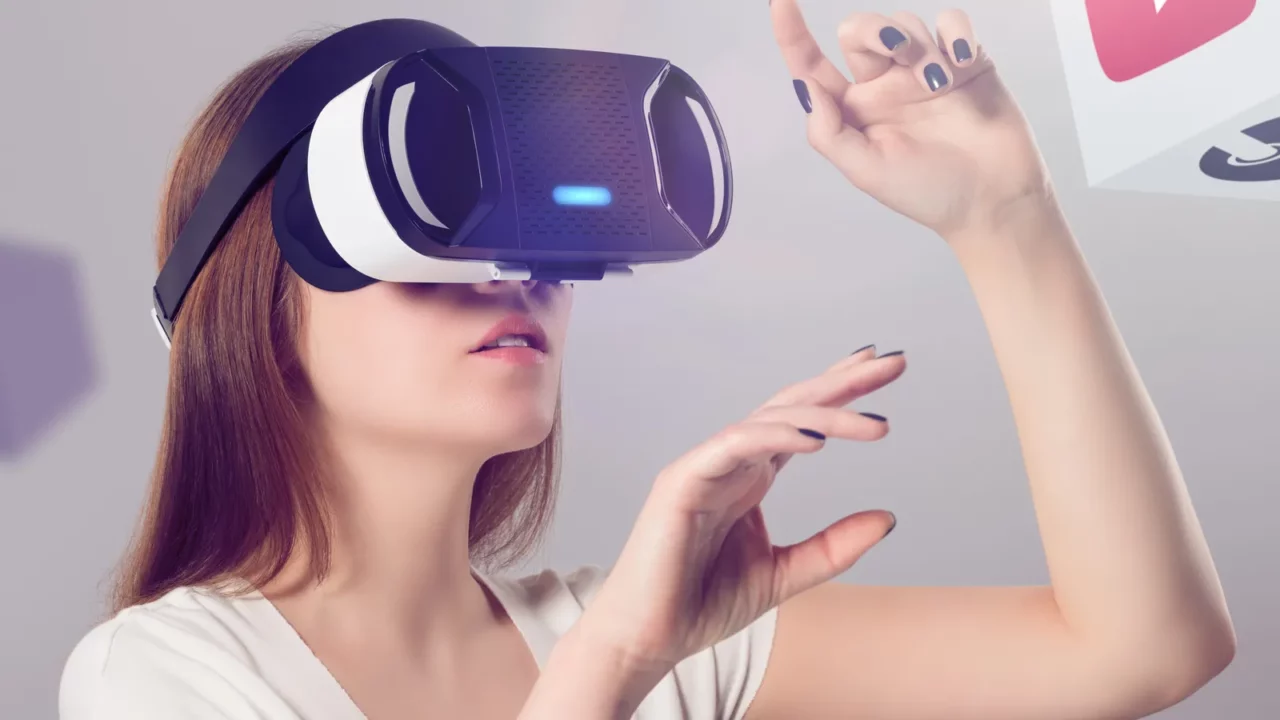
When NEO gets confused, human operators take over remotely using VR headsets and sensors to guide the robot through the task. That means early customers need to be genuinely comfortable sharing access to their private living spaces with people they’ve never met.
1X lists NEO Early Access at $20,000, with a subscription option listed at $499 per month for later shipments, which keeps it well out of reach for most households right now. CEO Børnich says finding the right early adopters who understand those trade-offs is a deliberate part of the company’s rollout strategy.

Isaac is already folding clothes in San Francisco
Weave Robotics skipped the full humanoid route with Isaac 0, a stationary laundry-folding robot that has begun shipping in the Bay Area and is also being tested or deployed in commercial laundry settings. Local reporting on a San Francisco laundry deployment described Isaac as sorting, folding, and stacking clothes, with each item taking about two minutes.
Co-founder Evan Wineland describes deployment itself as the company’s core strategy, using live commercial environments to build capability for a future home-focused version. A general-purpose Isaac for households is planned, though full autonomous task coverage is still being developed.

Sunday Robotics’ Memo can clear delicate dishes
Sunday Robotics says Memo can autonomously clear tables of plates and delicate glasses, discard food scraps, and load a dishwasher. It also made coffee and handled crumpled socks during the same unscripted session.
The company collects training data through a glove worn by people doing chores in real homes; official materials describe hundreds of people in unique homes, while reporting has described more than 500 data collectors. That wide variety of real home environments gives Memo a significantly richer training foundation than robots tested exclusively inside company facilities.

One company is skipping the hardware entirely
Physical Intelligence isn’t building a robot body at all. Instead, it is developing the AI software capable of making almost any robot smarter, regardless of which company manufactured the physical hardware it runs on.
Co-founder Chelsea Finn describes the goal as breathing intelligence into any physical form, from a humanoid robot to something that looks more like a standard appliance. The company is backed by Amazon founder Jeff Bezos and OpenAI, and its engineers are testing their software across a wide range of robotic arms and frames.
It’s hard not to wonder what all of this means for the average home once software like this matures and scales. Here’s an honest take on whether humanoid robots will take over your smart home and whether that’s something to look forward to or prepare for.

Experts say full adoption could take decades
The International Federation of Robotics estimates it may take up to 20 years before domestic robots become truly useful and widely accepted across average American households. A lot depends on how quickly AI improves and how far manufacturing costs fall in the years ahead.
Genesis AI plans to move from warehouses and factories into service industries first, then into homes after that phase is established. The companies building this technology are already in early conversations with real customers, which means the timeline may move faster than official estimates currently suggest.
Tesla, for one, isn’t waiting around for the timeline to sort itself out. See how Tesla shocked fans with its $10K Optimus robot reveal at Giga Texas and why it’s got people rethinking just how far away that 20-year estimate really is.
Would you welcome a robot into your home, or is that a step too far? Drop your thoughts in the comments and give this a thumbs up if it got you thinking!
This slideshow was made with AI assistance and human editing.
Disclaimer: The images used are for illustrative purposes only and do not depict the actual locations mentioned.
Don’t forget to follow us for more exclusive content right here on MSN.
Read More From This Brand:





