


The setup nobody saw coming
The plan to build Colossus, the world’s largest supercomputer, moved so fast and so secretly that Memphis city officials were completely blindsided when the project was announced as a done deal in June 2024.
Community groups and environmental advocates said the project advanced with little public transparency and without the level of community engagement they believed a facility of this scale required. In just 122 days, a former appliance factory on Riverport Road became the most powerful AI machine ever built, and nobody asked the neighbors for permission.

What exactly is Colossus?
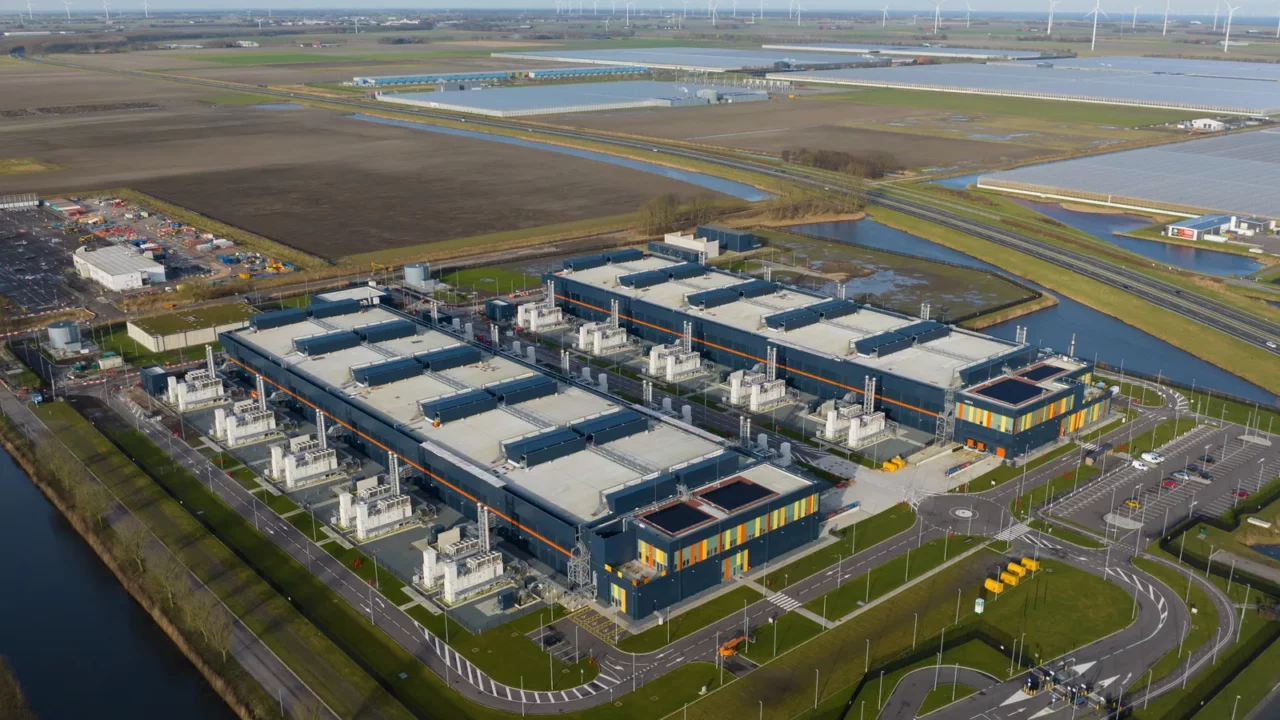
xAI says Colossus was built in 122 days and later expanded to 200,000 GPUs, underscoring how aggressively the company is scaling the computing infrastructure behind its AI ambitions. Reporting on xAI’s expansion plans indicates the broader Memphis-area buildout could reach roughly 2 gigawatts of power capacity, highlighting the extraordinary energy demands tied to the company’s next phase of growth.
For context, that is enough electricity to power a mid-sized American city. This is not simply a data center it is a power-hungry AI empire, and someone else is paying the price to keep it running.

The “temporary” turbine trick
Critics say xAI relied on a “temporary-mobile” classification for some gas turbines, a designation that regulators and advocacy groups have fiercely disputed because it allowed the equipment to operate without going through the same permitting process critics say should have applied from the start.
Advocates argue that the temporary-equipment approach let xAI run dozens of methane-burning turbines without the full public permitting and emissions-control process they believe the Clean Air Act required.

How many turbines are really running?
When the Southern Environmental Law Center deployed thermal imaging drones over the xAI facility, the findings were shocking. Aerial images shared by environmental groups showed 35 gas turbines at the site, with a combined generating capacity of about 422 megawatts, roughly comparable to the output of a nearby TVA gas plant.
That number was nearly double the previous report. Follow-up thermal imaging indicated that 33 of the 35 turbines were giving off significant heat, even as xAI’s formal permitting efforts focused on 15 units at the Memphis site. The numbers simply do not add up.

The lawsuit that finally said “enough”
On April 14, 2026, the NAACP and the Mississippi State Conference of the NAACP sued xAI and MZX Tech in the U.S. District Court for the Northern District of Mississippi, alleging that the companies installed and operated 27 unpermitted gas turbines in Southaven between August and December 2025.
Represented by Earthjustice and the Southern Environmental Law Center, the NAACP is demanding a halt to operations, proper air permits, maximum pollution controls, and daily financial penalties for every violation.

What the turbines are pumping out
These industrial gas turbines are not just producing noise; they are releasing a dangerous cocktail of smog-forming pollution and toxic chemicals, including formaldehyde and nitrogen oxides, both of which are directly linked to increased rates of asthma, respiratory disease, heart problems, and certain types of cancer.
According to the NAACP’s lawsuit, the 27 Southaven turbines could emit more than 1,700 tons of nitrogen oxides per year, a level the complaint says would likely make the facility the largest industrial source of NOx in the greater Memphis area

Memphis was already failing
Memphis has repeatedly ranked poorly in asthma and air-quality discussions, including receiving an F for ozone pollution from the American Lung Association and appearing among the cities AAFA identifies as especially challenging for people living with asthma.
Critics argue the project expanded into a region already burdened by industrial pollution, making the environmental stakes far higher for nearby neighborhoods.

Boxtown: Already at the breaking point
Boxtown is a predominantly Black community with a median household income of just $37,000, situated only a few miles from where Musk built his supercomputer empire. Before xAI arrived, residents already faced a cancer risk four times the national average.
The neighborhood is tightly surrounded by industrial polluters, an oil refinery, a steel mill, a TVA gas plant, and multiple Superfund sites. Residents and advocacy groups say Boxtown’s long history of industrial burden makes the neighborhood especially vulnerable to additional pollution from large energy-intensive projects.

A $44 million health bill
A February 2026 study highlighted by the Southern Environmental Law Center and conducted by Harvard-trained environmental health scientist Dr. Michael Cork estimated that the proposed gas plant tied to Colossus 2 could cause as much as $44 million a year in health damages.
The analysis documented projected increases in fine particulate matter spreading far beyond Boxtown, reaching neighborhoods as distant as Germantown and North Memphis, and driving measurable spikes in premature deaths, asthma attacks, heart attacks, and hospital admissions. The financial cost of Big Tech’s AI ambitions is not appearing on xAI’s balance sheet. It is landing directly on vulnerable families.

The community fought back
When Memphis residents learned the full scale of what xAI was doing, the pushback was immediate and fierce. Hundreds of community members packed public hearings, submitted formal comments to regulatory agencies, flooded city council chambers, and marched in organized street protests demanding accountability.
That pressure produced real results in June 2025; xAI removed 20 turbines from the Colossus 1 site and finally secured permits for the 15 that remained. But residents make clear the damage is already done, and the fight for Colossus 2 is only just beginning.
A pattern playing out nationally
What is happening in Memphis is not a local story; it is a warning for the entire country. Across the United States, rapid data-center expansion is increasingly colliding with local concerns over land use, water demand, electricity needs, noise, and air pollution, especially in smaller communities with limited leverage over large developers.
What is clear is that the data-center boom is widening the debate over who receives the economic upside of AI infrastructure and who absorbs the environmental costs.
Curious how these shifts are already raising new concerns? Take a look at how OpenAI’s latest AI models are stirring fresh cybersecurity questions.

What needs to happen next
The NAACP’s lawsuit demands a full operational shutdown until xAI secures proper air permits, installs the most effective pollution controls currently available, and pays financial penalties for every single day it violates the Clean Air Act.
The AI revolution is undeniably transforming the world, but it cannot, and must not, be built on the poisoned air and broken health of America’s most vulnerable communities.
If you’re curious about how Musk’s influence stretches beyond the courtroom, take a look at why his White House comeback is turning heads.
This slideshow was made with AI assistance and human editing.
Don’t forget to follow us for more exclusive content right here on MSN.
Read More From This Brand:





Lucky you! This thread is empty,
which means you've got dibs on the first comment.
Go for it!